
WELCOME TO VISUAL BRANDING
A Practical Versatile Covering Solution
Flat tarps are simple, rectangular (or square) sheets of durable material designed to protect, cover, and secure items in a wide range of environments. Unlike fitted or custom-shaped covers, flat tarps are completely flexible and can be folded, tied, or draped to suit many different tasks. Their simplicity is exactly what makes them one of the most useful and widely used protective products in construction, agriculture, transport, and everyday outdoor activities.
What Is a Flat Tarp?
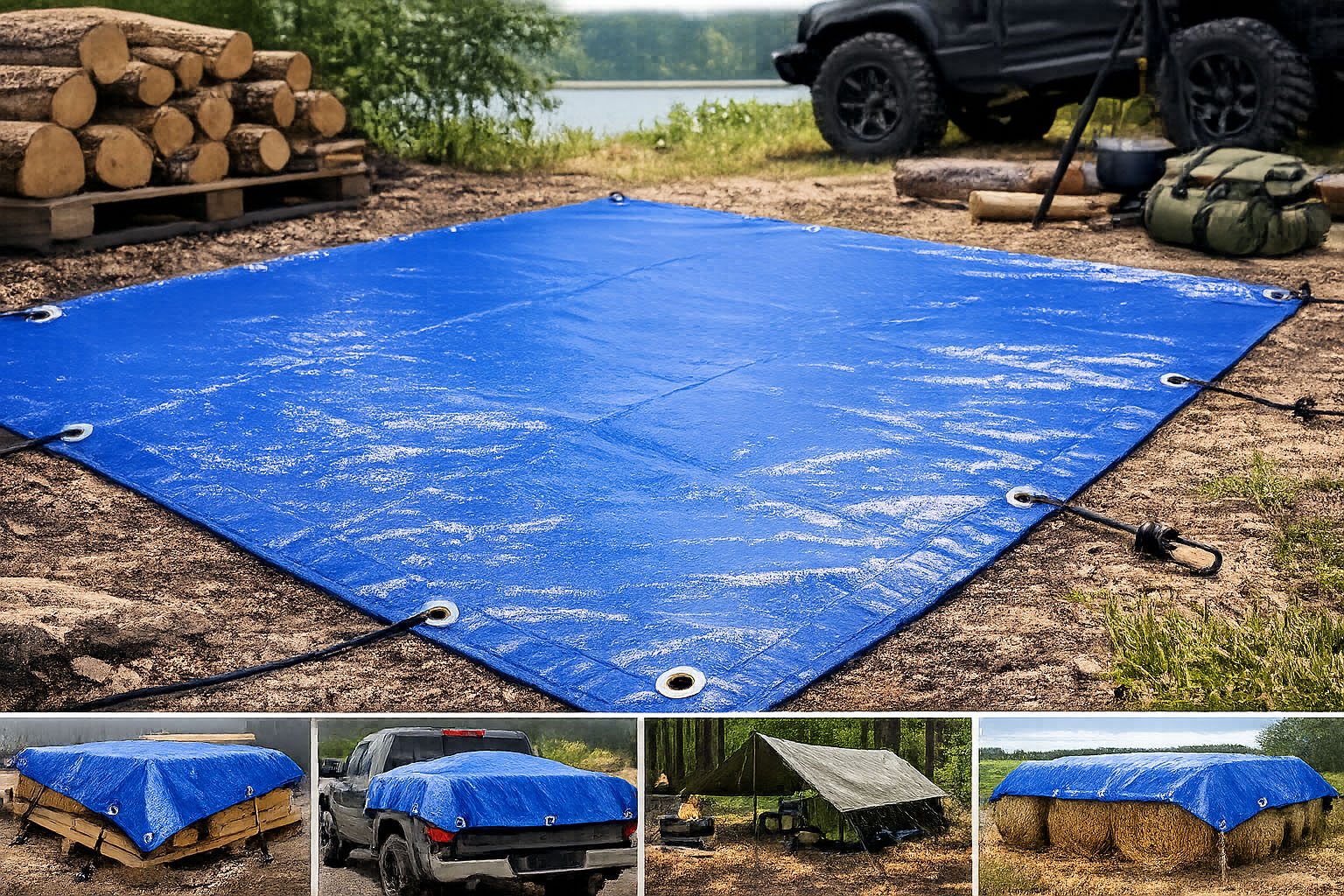
A flat tarp is a single, flat sheet made from waterproof or water-resistant fabric. Most flat tarps include reinforced edges and metal grommets (eyelets) spaced around the perimeter. These grommets allow ropes, bungee cords, or straps to be threaded through so the tarp can be securely fastened to vehicles, frames, fences, or ground anchors.
Because flat tarps are not pre-shaped, they can be adapted to cover almost any object, from stacked materials to equipment, furniture, firewood, or temporary structures.
Common Uses
Flat tarps are used in both professional and personal settings, including:
- Covering materials on job sites such as lumber, cement bags, or tools
- Protecting vehicles and cargo on trailers, trucks, and roof racks
- Outdoor and camping applications, including ground sheets, rain shelters, and gear covers
- Agricultural uses, such as covering hay, feed, or machinery
- Home and garden tasks, including painting projects, debris collection, and seasonal storage
Materials and Construction
Flat tarps are available in several materials, each suited to different levels of durability and exposure:
- Polyethylene (poly) tarps – Lightweight, waterproof, and affordable. These are the most common and are ideal for general-purpose use.
- Canvas tarps – Heavier and more breathable. Canvas allows some airflow, which helps reduce condensation when covering equipment or furniture.
- Vinyl or PVC tarps – Extremely durable, fully waterproof, and resistant to tearing. These are commonly used in industrial and transport applications.
- Mesh tarps – Designed to allow airflow and light through while still providing containment or shade.
The edges of a quality flat tarp are typically heat-sealed or stitched and reinforced to prevent tearing, especially around the grommets.
Sizes and Thickness
Flat tarps come in a wide range of standard sizes, from small sheets for personal use to large industrial covers for trucks and building sites. Thickness is often described by weight or material density rather than a single universal rating.
Heavier tarps generally offer:
- better tear resistance
- improved wind performance
- longer service life under harsh conditions